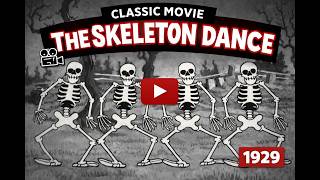
The Skeleton Dance (1929): A Macabre Masterpiece of Animation
Released in 1929, The Skeleton Dance remains one of the most iconic pieces of film ever produced. As the inaugural Silly Symphony, it broke away from traditional character-driven narratives to explore the marriage of rhythmic sound and fluid motion, setting the stage for everything from Fantasia to modern music videos.
Technical Innovation: Pre-Scored Animation (E-E-A-T)
In the early days of sound film, animation usually followed the "after-the-fact" sound method. However, for The Skeleton Dance, composer Carl Stalling and Walt Disney flipped the script. Stalling suggested a musical novelty where the characters' movements were mathematically synchronized to a pre-determined beat.
This required Ub Iwerks to animate with surgical precision. Every hop, rib-cage xylophone solo, and graveyard shuffle was timed to the frame. This expertise in synchronization proved to the industry that animation could be an art form dictated by rhythm and mood rather than just gags.
Production Trivia & Banned History
Despite its legacy today, The Skeleton Dance faced significant hurdles upon release:
- Censorship: The film was originally banned in Denmark for being "too gruesome" for audiences.
- Distributor Rejection: Many distributors initially refused the film, claiming it was "too morbid." It wasn't until it premiered at the prestigious Carthay Circle Theatre that it became a sensation.
- Iwerks' Solo: Ub Iwerks reportedly animated the entire film in just a few weeks, a feat of productivity that remains legendary in the animation community.
Legacy in Modern Pop Culture
From its influence on Tim Burton's The Nightmare Before Christmas to the viral "Spooky Scary Skeletons" memes of the digital age, the imagery of 1929’s graveyard revelry is burned into the global consciousness. It stands as a testament to the timelessness of high-contrast black-and-white art.
Watch The Remastered Original
Experience the 1929 classic that defined the Silly Symphonies.