The Animation Revolution: How "The Three Little Pigs" (1933) Built the Foundation for Feature Films
An in-depth look at the Silly Symphony that transitioned animation from simple gags to emotional storytelling.
Introduction: Beyond the "Rubber-Hose" Era
In the early 1930s, animation was largely defined by "rubber-hose" physics—characters with noodle-like limbs who moved in repetitive, rhythmic loops. While entertaining, these characters often lacked unique internal lives. This changed in 1933 with the release of The Three Little Pigs. Produced as part of the Silly Symphony series, this short is now recognized as the definitive birth of true character animation.
1. Personality Through Movement: The "Pigs" Framework
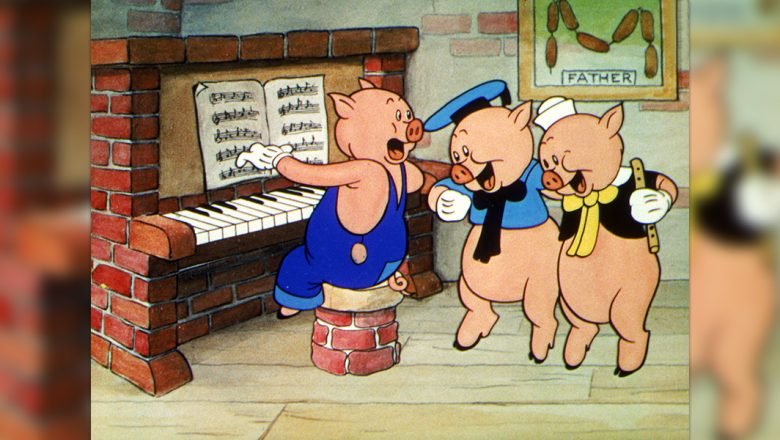
The primary innovation of The Three Little Pigs was the realization that three characters who looked nearly identical could be perceived as entirely different individuals based solely on how they moved.
- Physical Differentiation: While earlier shorts like The Skeleton Dance relied on synchronized, identical movement for comedic effect, Disney animators gave each pig a specific "acting" style.
- The Practical Pig: His movements were heavy, deliberate, and cautious, reflecting his disciplined nature. He built with bricks, and his posture mirrored that solidity.
- Fifer and Fiddler: Their movements were light, bouncy, and synchronized with music, signaling their shared impulsiveness and lack of concern for the future.
2. The Blueprint for the Seven Dwarfs
The lessons learned from the Pigs were directly applied to Snow White and the Seven Dwarfs. Walt Disney realized that if he could make three pigs feel different, he could do the same for seven dwarfs who shared a similar character model.
| Technique | The Three Little Pigs (1933) | Snow White (1937) |
|---|---|---|
| Character Archetypes | The "Responsible One" vs. the "Carefree Ones." | Expanded into seven distinct emotional states (Grumpy, Happy, etc.). |
| Acting through Weight | Practical Pig’s heavy, grounded walk. | Dopey’s toddler-like waddle vs. Grumpy’s rigid, angry stride. |
| Secondary Action | The Wolf's huffing and puffing affecting his whole body. | The Dwarfs' individual reactions to Snow White sleeping in their beds. |
3. The Cultural Anthem of the Great Depression
The impact of the cartoon extended far beyond the theater. The centerpiece song, "Who's Afraid of the Big Bad Wolf?", resonated with a public gripped by the Great Depression. The "Wolf" became a metaphor for economic hardship, and the Pigs' ultimate victory through hard work and persistence offered a message of hope.
"The film proved that animation could handle complex social themes and tap into the collective psyche of a nation."
4. Technical Stepping Stones
Walt Disney used the Silly Symphony shorts as a laboratory. The success of The Three Little Pigs provided the technical and financial foundation for Disney’s "Great Folly"—the first feature-length animated film.
By proving that audiences could stay emotionally invested in a character's safety for eight minutes, Disney felt confident that they could sustain that interest for eighty minutes. The distinct personalities developed here changed the industry's focus from "What is the next gag?" to "What is the character feeling?"